

By Dr Enock Sithole
The University of Media Arts and Communication (UniMAC) in Ghana is pioneering a rigorous PhD programme in communication and media, whose implementation comes in six different strands.
The three-year-old UniMAC is a merger of three universities: the Ghana Institute of Journalism, established in 1959; the National Film and Television Institute, established in 1978; and the Ghana Institute of Languages, established in 1961.
UniMAC’s Pro-Vice Chancellor, Professor Winston Abroampa, told Ajenda that having been established by an Act of Parliament, the uniqueness of this university is the fact that it’s the country’s “only university with an overarching mandate to develop capacity in communication and media.”
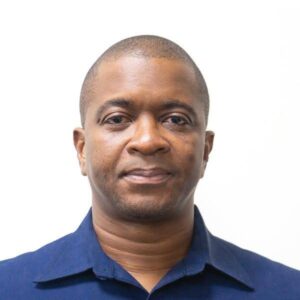
UniMAC’s Pro-Vice Chancellor, Professor Winston Abroampa
While many institutions in Ghana offer programmes in communication, UniMAC is now among the few universities offering a PhD programme, said Prof Abroampa.
The university also offers undergraduate and master’s degree programmes. It introduced a PhD programme when it was felt that “there was a need for us to develop a PhD programme to build capacity and to further enhance the capacity building endeavours of this university,” he added. Thus, the PhD programme was developed, received accreditation and enrolled its first cohort in the 2024/2025 academic year.
Now in its second semester, the four-year programme’s curriculum comprises coursework and a research thesis. The programme attracted 63 applications, but only 20 could be accommodated.
The programme is structured in six areas of specialisation comprising development communication, political communication, public relations or also strategic communication, marketing, journalism and media, and film and television. Candidates can choose to specialise in one of the six strands but ultimately leave with a PhD in communication and media.
In the coursework part of the programme, the students take courses in research and elective courses in their areas of specialisation, said the Pro-Vice Chancellor. The research courses entail qualitative research and quantitative research, the philosophy of research and some social sciences courses in addition to the elective courses.
The UnMAC Pro Vice-Chancellor said the overall curriculum is designed to deviate from the norm in the country, where journalism courses are “very general”.
In recognition of the fact that some of the candidates are academics and others are industry professionals who might want to teach in higher education in the future, the coursework also entails two pedagogic courses, namely pedagogy and administration in higher education. “We don’t want to assume that once you have a PhD, you can teach at the university level and be able to appreciate higher education administration. So, we have the pedagogy courses to prepare those candidates who might want to teach in higher education in the future,” argued Prof Abroampa.
UniMAC plans to introduce studies in development communication, and “we are looking forward to building capacity in eco communication, agribusiness communication, nuclear communication, etc.”, he said.
The Pro-Vice Chancellor also discussed the need to decolonise the learning programmes at UniMAC, saying that this was “very critical because the theories we have relied on to frame our realities are Western, meanwhile, our realities are totally different. So, it’s important to look at the extent to which we can create our own frameworks”.
While they have no course on the subject of decolonisation, he added, the issue was discussed with the PhD candidates during the orientation, and it’s hoped that some of them will pursue it in their research. “It will be interesting to see our PhD students take it up in their research in some of their specialisation areas, so that we can develop more African, Afrocentric theories to help explain our realities,” he said.
The students will be instructed in writing for publication and will be expected to produce publishable papers. While not compulsory with the current cohort, the candidates will also be expected to attend and present at an international conference. In the future, conference attendance will be compulsory, he said.
“They must be able to talk confidently about their PhD, so we are encouraging them to attend and present at conferences, although for now, it is optional,” he said.
“We are hoping that by the time they can go through these milestones successfully, they should be able to compete with anybody who has a similar degree from any part of the world,” concluded Prof Abroampa.