
News
Ajen publishes a monthly newsletter, called AJENda, to keep colleagues aware of changes to the journalism landscape in Africa from an academic, research and professional point of view.
AJEN Round Table 2026: Day 3
On 14 August, the Board of Ajen held its meeting to take stock of the Round Table event and to discuss the way forward. They were joined by the representatives of KAS Media Africa for a tour of the Media Trust in Port-Louis and of the Mauritius Broadcasting Corporation in Moka.
AJEN Round Table 2026: Day 2
Day 2 of the 2026 Ajen Round Table kickstarted with a lively and 2-hour practical workshop on AI in journalism by Harry Misiko, Digital Lead at the Nation Media Group in Kenya.
AJEN Round Table 2026: Day 1
From 12-14 August 2026, journalists, educators, and media practitioners from across the continent gathered in Mauritius for the annual African Journalism Education Network’s (AJEN) fourth Round Table, under the theme “Reimagining African journalism education in a time of Technological Disruptions and Possibilities”.

New Publications in July 2026
This latest list of publications includes works that explore the evolving landscape of media and communication across the Global South. From the decolonisation of media and communication research in Africa, participatory communication and social justice in the Global South to the growing influence of social media on food literacy in Nigeria and family communication around sex and sexuality in South Africa.

Journalism in a State of Constant Crisis: Exhaustion, Adaptation & Democratic Self-Assertion
At the annual conference of the International Communications Association in Cape Town in early June 2026, the panel ‘Journalism in Flux: Changing Perceptions and Narratives’ addressed a fundamental question: What happens to journalistic work when institutions become fragile, funding models collapse and democratic certainties fade?
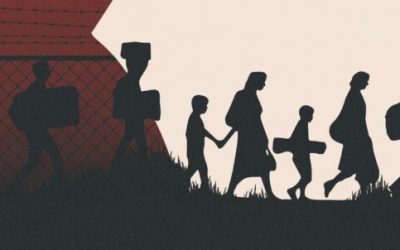
Information campaigns on migration: The regulation of mobility in West Africa
How has Europe sought to promote anti-migration narratives in order to control the mobility of African populations? Julia Van Dessel’s doctoral thesis L’immobilisation pour horizon. Fabrique et enjeux d’un instrument européen de dissuasion migratoire en Afrique de l’Ouest : les «campagnes d’information et de sensibilisation» offers a new and insightful answer to this question. It thus joins the now considerable body of literature on migration information campaigns (MICs) and the externalisation of European migration policy[1].
News Avoidance, News Fatigue: New Findings at ICA 2026
In an era of polycrisis, polarisation and digital upheaval, the media usage patterns of audiences are also undergoing profound changes. News avoidance and news fatigue are increasingly raising questions about citizens’ social and political engagement in various political contexts and media systems. Several panels at the annual conference of the International Communication Association (ICA), held in Cape Town in early June 2026, also addressed these issues.

Howzit, Here’s the News: Amahle-Imvelo Jaxa on AI, journalistic values and changing how we consume news
Amahle-Imvelo “Jaxx” Jaxa has built an audience of almost 400 000 followers by making politics, economics and current affairs accessible for everyday South Africans. Through short-form videos that prioritise context, verification and clarity, she demonstrates how digital creators are transforming the way news is consumed while reinforcing the enduring value of credible journalism in an increasingly complex media and information landscape.
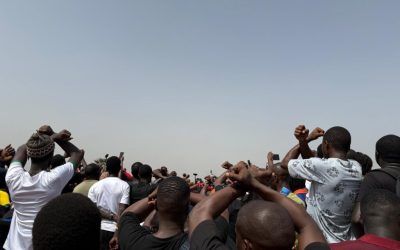
As Guinea-Bissau’s democracy falters, journalism education becomes more vital than ever
Political instability and growing pressure on independent media in Guinea-Bissau highlight why journalism matters most during moments of democratic uncertainty. As competing political narratives cloud public understanding, the country’s experience underscores the critical role of journalism education in preparing reporters with the skills, resilience and ethical judgement needed to verify information, hold power to account and serve the public when reliable reporting is needed most.
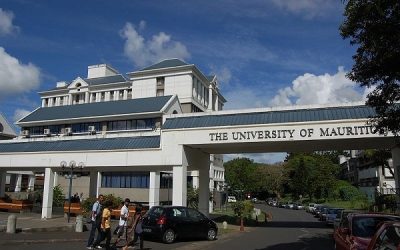
Paradise meets progress: Beautiful Mauritius hosts Africa’s journalism education roundtable
Journalism and communication academics from the continent are packing their bags for the 2026 edition of the annual roundtable of the African Journalism Education Network to be held in Mauritius under the theme Reimagining African journalism education in a time of Technological Disruptions and Possibilities.
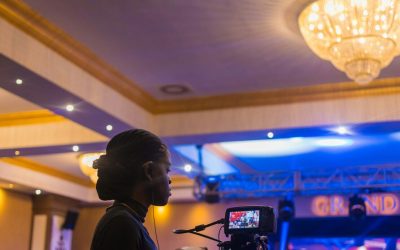
East Africa’s landmark media research initiative delivers publications and new knowledge
Two years after the launch of an ambitious initiative to strengthen journalism, media and communication research in East Africa, the project is beginning to produce tangible results, including scholarly publications, innovative research and strengthened regional collaboration among universities.

First PhD graduates at UCU signal a new era in Media and Communication Studies scholarship in East Africa
When Uganda Christian University (UCU) celebrates the graduation of the first doctoral candidate from its pioneering PhD in Communication Studies programme later this year, the occasion will mark more than an academic milestone.
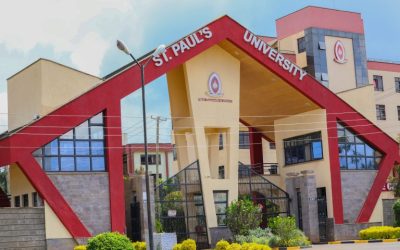
AI, mental health and journalism to dominate EACA conference
Artificial intelligence, mental health, environmental communication and journalism’s struggle to adapt to a rapidly changing digital landscape will dominate discussions when journalism and communication scholars from across the globe gather in Kenya in August 2026 for the annual conference of the East African Communication Association.

For three journalism students from South Africa and Zimbabwe, a journalism degree is an emphatic ‘yes’
Rather than making journalism education obsolete, WCJ students Keletso Zwane and Jamie Ho, as well as Rejoice Kambarami, who recently finished her journalism degree at Midlands State University, argue that technological disruption has made professional training more valuable than ever.

From child TV presenter to the national broadcaster: Why Criselda Lewis went back to journalism school after two decades in the newsroom
By Enock Sithole When Criselda Lewis was just 12 years old, a chance visit by television talent scouts to her school changed the course of her life....