
By Kemiso Wessie
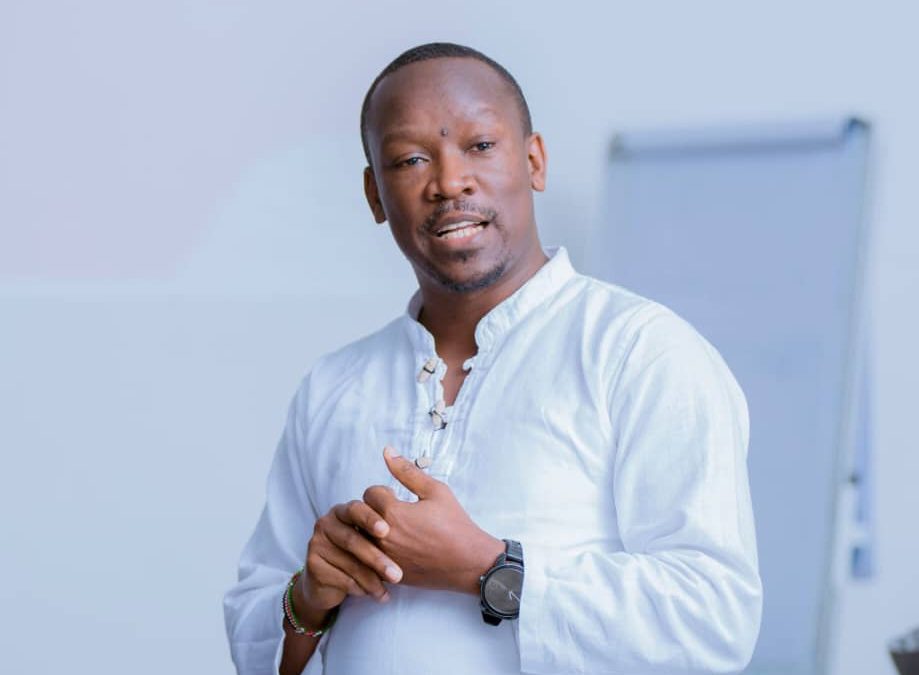
For Dr Fred Kakooza, journalism education is as much a calling as it is an academic discipline. A Senior Lecturer in the Department of Journalism and Communication at Makerere University in Uganda and Secretary General of the East Africa Communication Association (EACA), Dr Kakooza’s work is grounded in mentorship, research and an enduring belief in journalism’s power to uplift society.
Beyond the lecture halls and research publications, he is also a husband, a father, and deeply committed to mentoring young people as they navigate both the journalism profession and the world beyond it. He says; “It is always refreshing to interact and engage with young people as you facilitate the process of shaping knowledge, skills and attitudes that are vital in their future interactions.”
Born in Mengo, one of Kampala’s historic towns, Dr Kakooza’s educational journey included Old Kampala Secondary School where he completed his O-Levels and A-Levels at Lubiri Secondary School. While enrolled at Makerere University, he earned a Bachelor’s degree in Mass Communication, followed by a Master’s in Journalism and Communication. This higher academic path later took him to South Africa, where he completed a PhD in Cultural and Media Studies at the University of KwaZulu-Natal.
Dr Kakooza traces his entry into research to early mentorship by Professor Goretti Nassanga, who recruited him as a research assistant during his Master’s. But it was after completing his PhD in 2018 that his research interests fully crystallised.
His research spans several critical and timely issues facing African media and society today. One of his notable studies examined Facebook and HIV prevention among young people, establishing that “social media could be leveraged as a communication tool to harness HIV/AIDS prevention through targeted messaging, interactivity and engagement, as well as the dissemination of multimedia content.”
He has also published on the safety of women journalists, highlighting the widespread online and offline harassment they face, including stalking, phishing, blackmail and sexual harassment, challenges that significantly undermine their productivity and wellbeing.
During the COVID-19 pandemic, Dr Kakooza’s research examined broadcast media coverage and revealed a heavy reliance on government sources, with limited alternative voices shaping public discourse. His work on digital communication in public service delivery further underscores both the potential and limitations of digital platforms, pointing to barriers such as digital illiteracy, high data costs and entrenched patriarchal structures.
Across his work, a consistent concern emerges: how digital tools can both empower and exclude, and what must be done to ensure they serve the public good.
Reflecting on journalism education across the continent, Dr Kakooza identifies governance as one of the most pressing challenges.
“Good journalism can only be practiced in an environment that is tolerant to alternative views without repercussions,” he explains. “Most media environments in Africa are not free to exercise good journalism, and this affects journalism education.”
He also points to poor remuneration, high staff turnover, profit-driven media models, outdated curricula and insufficient training equipment as factors eroding the profession’s appeal. The rise of social media, where anyone can produce and disseminate information, has further complicated the landscape, contributing to widespread misinformation and diluting journalism’s societal role.
To address these challenges, Dr Kakooza embraces problem-based learning. He encourages students to produce journalism products that align with the reality of society.
Learners are tasked with developing story pitches, podcasts, audio slideshows and vlogs using accessible digital tools such as mobile phones and apps. Students are encouraged to think creatively and work with the tools already in their hands, “[They] must be aware of the environment in which they live and how to use journalism to make that environment better,” he adds.
Journalism, he believes, should empower the public, set meaningful agendas, and contribute to societal wellbeing. “If the society is better and uplifted,” he reflects, “good journalists and good journalism will thrive.”
For Dr Kakooza, the essence of good journalism lies in courage and care. “A good journalist is one who is able to stand up against social injustices by providing a voice to the voiceless through balanced reporting,” he says.
He is currently involved in collaborative research on BRICS and media in Africa, journalists’ trauma in the line of duty, TikTok and political mobilisation, and digital communication in public service delivery.
Outside academia, he turns to music and film to recharge, particularly live band performances and futuristic movies, and enjoys practising the piano in his downtime.
If he could share a meal with three people, his choices are deeply personal: his mother Sarah, whom he describes as his “superhero”; his wife Moreen, whose patience and encouragement have carried him through life’s many phases; and his best friend George, a constant source of support.
And if granted one superpower? He would choose the ability to turn back time, “I feel there are things that can be made better or corrected if time stopped just for a moment for myself and others,” he says.
In many ways, that desire mirrors both his scholarship and teaching: creating spaces for reflection, growth and the possibility of doing better, through journalism and beyond.
Your life and story are a true inspiration
I have enjoyed the read, may God continue to bless the works of your hands
Thanks for the story and inspiration!