
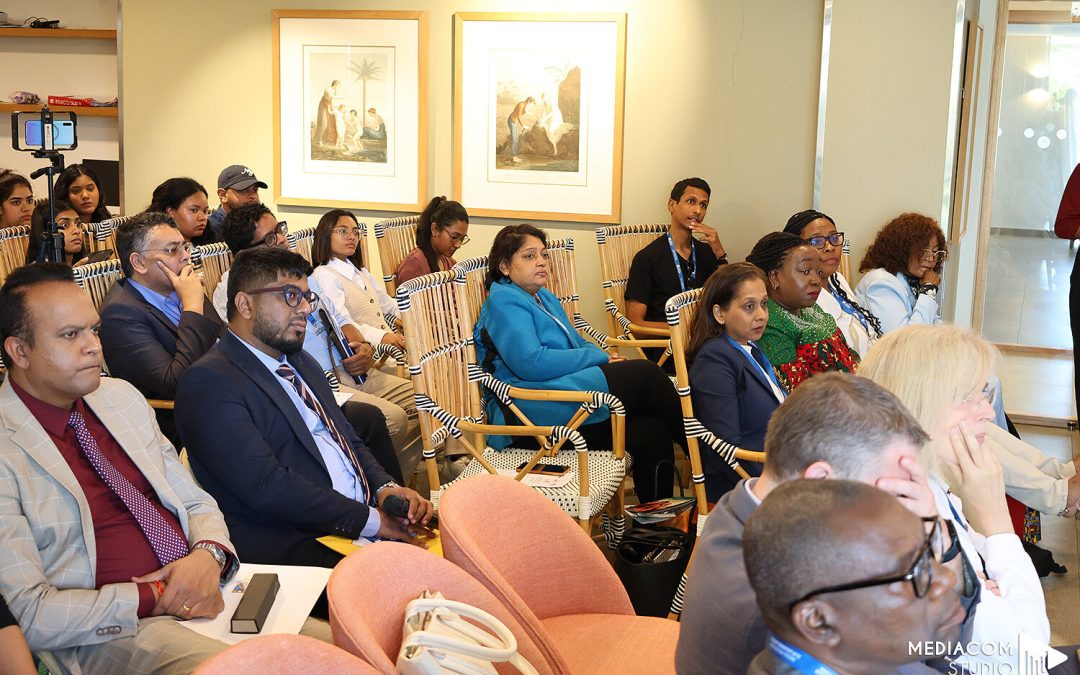
By Kemiso Yasmine Wessie
From entrepreneurial journalism to trauma-informed reporting, two discussions at the 2026 African Journalism Education Network Round Table in Mauritius explored what it will take to prepare the next generation of African journalists for a changing industry.
The future of journalism in Africa means rethinking how journalists earn a living, how journalism is taught, and how the profession supports those doing the work. This topic was central at the 2026 African Journalism Education Network’s (AJEN) annual Round Table in Mauritius, held in August. Two panel discussions highlighted the human and economic sides of journalism’s future.
Rethinking the Business of Journalism
Traditional newsroom jobs are changing every day, and freelancing and entrepreneurial journalism are becoming more important. To prepare graduates for this, it’s not enough to teach writing, reporting, and publishing. They also need to learn about the business of journalism.
The first panel, ‘Teaching entrepreneurial & freelance journalism,’ brought together freelance travel and culture journalist Ameerah Arjanee, media consultant Khalil Cassimally, France Télévisions international correspondent Abdoollah Earally and Pheladi Sethusa of the Wits Centre for Journalism.
“It’s not just about technology and the tool that has changed how we practise our craft,” explained moderator Associate Professor Sisanda Nkoala of the University of the Western Cape. “These tools have transformed how we do what we do, when we do it, where we do it, why we do it. All the five W’s and H around what journalism is and what we as educators teach when we teach it.”
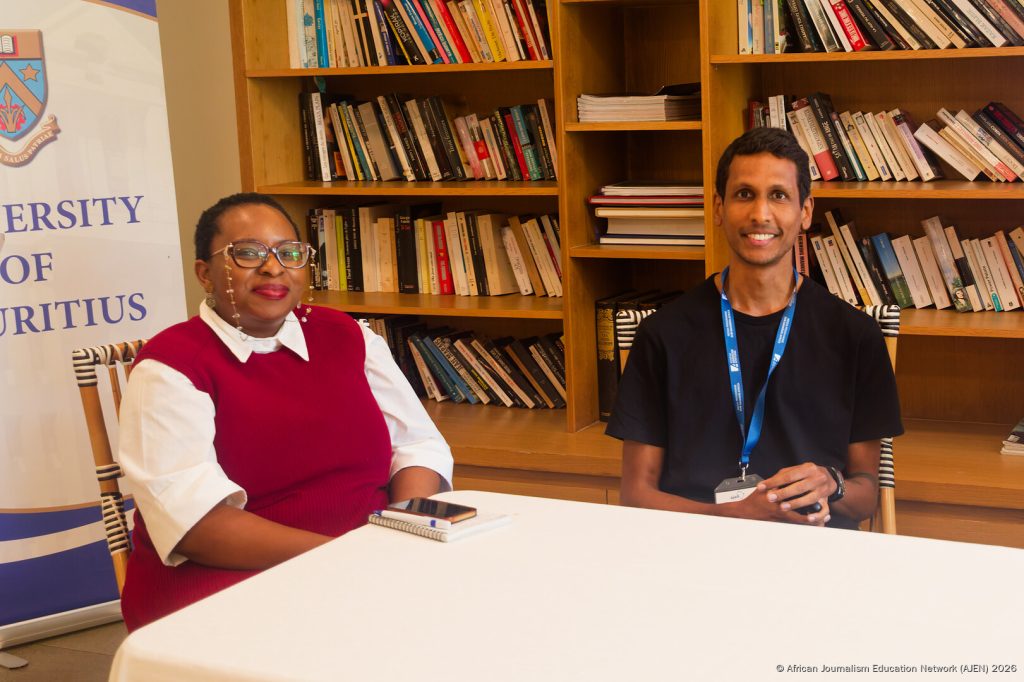
Pictured: Pheladi Sethusa and Khalil Cassimally.
The panellists’ experiences illustrated how routes into journalism are changing. Arjanee, whose scholarly background is in literature and translation, described entering travel and culture journalism by simply pitching stories to publications. “I had an interesting story to tell,” she mentions. Early stories that connected Norway, South Africa and India grew into commissions for travel, food, literary and fashion magazines. A mentorship programme in the UK helped her build professional connections and develop her practice.
Her experience showed that digital platforms now let journalists build careers outside traditional newsrooms. Nkoala pointed out that publications and newsrooms no longer control access as the internet continues to democratise the establishment, so people from many backgrounds can enter journalism.
But this does not mean a pipeline to financial security. For Pheladi Sethusa, who freelanced before moving into journalism education, one of the biggest challenges was learning the practicalities of working independently: how to approach clients, set rates and understand the value of her work.
These are the skills she wants students to acquire before graduating. Her approach to teaching entrepreneurial journalism encourages students to identify their interests, develop a distinctive editorial vision and consider what they want their work to communicate. Rather than solely producing content, the next generation of journalists need to understand what distinguishes their work and how to position themselves professionally.
Khalil Cassimally offered another perspective, drawing on his experience in editorial development and audio projects. He highlighted the growing importance of people who connect editorial, technological, and project teams. With collaborative journalism becoming the norm, the industry needs professionals who understand that producing relevant information is not the exclusive responsibility of trained journalists.
He challenged the assumption that journalists inherently know what audiences need. Instead, he advocated for an approach that places the communities journalism serves at the centre of its work.
Abdullah Earally’s reflections on the changing Indian media sphere reinforced this point. “I’m witnessing live the transition of ‘mass media’ to a mass of media. It’s quite something revolutionary,” he says. He addressed India’s Cockroach Janta Party and this emergence of alternative media platforms and young digital movements that attract public attention and mobilise people beyond the traditional news cycle.
Alternative media filled gaps left by mainstream outlets that overlooked certain stories and communities. It provides opportunities for independent journalists but also raises questions about how journalism education can prepare students to navigate an increasingly crowded information environment.
The panellists made a convincing case for expanding journalism curricula beyond foundational newsroom skills. Financial literacy, pitching, audience engagement, collaboration, self-positioning and understanding emerging technologies must be a mainstay in every journalist’s arsenal.
Journalism Education Must Also Teach Care
Moderated by Sofie Gullberg of the Fojo Media Institute in Sweden, ‘Shared Stories, Shared Solutions: Co-Designing Journalism Education on Stress and Trauma in East Africa,’ examined a cooperative initiative involving journalism educators in Rwanda, Ethiopia and Somalia. Kowthar Abdullahi of Somali National University, Andrew Osongo of East African University in Rwanda and Zelalem Tesfaye of Bahir Dar University in Ethiopia presented insights from developing and implementing stress- and trauma-management training.
Despite routinely reporting on conflict, violence, political instability and other traumatic events, journalists are rarely equipped with the expertise and practical skills to manage the psychological effects of their work. The initiative was born in recognition of this gap.
In Rwanda, Osongo described how a five-day training programme brought together journalists from print, radio, television and online media. Of the 11 participants, 10 had never received training in stress and trauma management. The programme combined input from psychologists and experienced journalists with practical sessions on recognising trauma, setting professional boundaries, self-care and trauma-informed reporting.
An important finding was that many journalists had normalised the effects of stress, believing they had to endure difficult working conditions. Fear of disappointing editors, losing opportunities or appearing incapable often made it hard to refuse excessive workloads.
 Osongo also highlighted how unmanaged trauma can affect the quality of journalism. “They’ll begin producing stories that can, in themselves, traumatise people,” he adds. Psychological exhaustion can influence editorial judgement, including the selection of headlines and photographs.
In Ethiopia, Tesfaye outlined a pilot extracurricular programme involving between 100 and 150 undergraduate students across five Jesuit institutions. Developed through collaboration among educators, psychologists and experienced journalists, the programme introduced students to the psychological dimensions of reporting before exploring their relationship to journalistic ethics and practice.
In Somalia, Abdullahi emphasised the importance of training the trainers. By training journalism educators, mid-career professionals, and undergraduate students, the initiative intended to ensure that knowledge would spread beyond a limited group of participants. Building local teaching capacity was central to making the intervention sustainable.
Across all three countries, the shared experience showed the value of co-designing educational resources that respond to regional challenges while staying sensitive to local contexts. It also stressed the importance of expanding opportunities for women journalists and educators, especially in environments where their participation can be difficult.
Towards a Sustainable Future
Although the discussions approached the future of journalism from different perspectives, their underlying message was closely connected. A sustainable media industry requires journalists who navigate changing business models without losing sight of the field’s public purpose and who report difficult stories without sacrificing their well-being.
Ultimately, reimagining African journalism education is not simply about responding to disruption. It is about ensuring the next generation has the skills, support, and opportunities to shape the industry on its own terms.