

By Kemiso Yasmine Wessie
Artificial intelligence has remained a defining conversation in the zeitgeist. Discussions at our 2026 annual Round Table explored the opportunities AI presents for newsrooms and journalism education, as well as the questions it raises about accuracy, editorial judgement, access, and the future of the profession.
The African Journalism Education Network’s 2026 annual Round Table, themed ‘Reimagining African Journalism Education in a Time of Technological Disruptions and Possibilities’, brought together academics, journalists, and media professionals to discuss how journalism education can adapt to a fast-changing industry.
Two sessions focused on how human judgement and machine capability interact: the Adenauer Media Lecture by Professor Claudia Nothelle, and a practical workshop led by Harry Misiko, Managing Editor of Content Strategy at Kenya’s Nation Media Group.
The Tool Is Not the Journalist
In her lecture, ‘Video Didn’t Kill the Radio Star. AI Won’t Kill Us,’ Professor Claudia Nothelle said the main challenge of AI is technological as well as pedagogical. She warned, using examples of AI-created content published or circulated without adequate verification, that even experienced professionals can be persuaded by content that appears credible. “The tool isn’t the danger. The assumption that fluency means accuracy, that’s the danger,” she said.
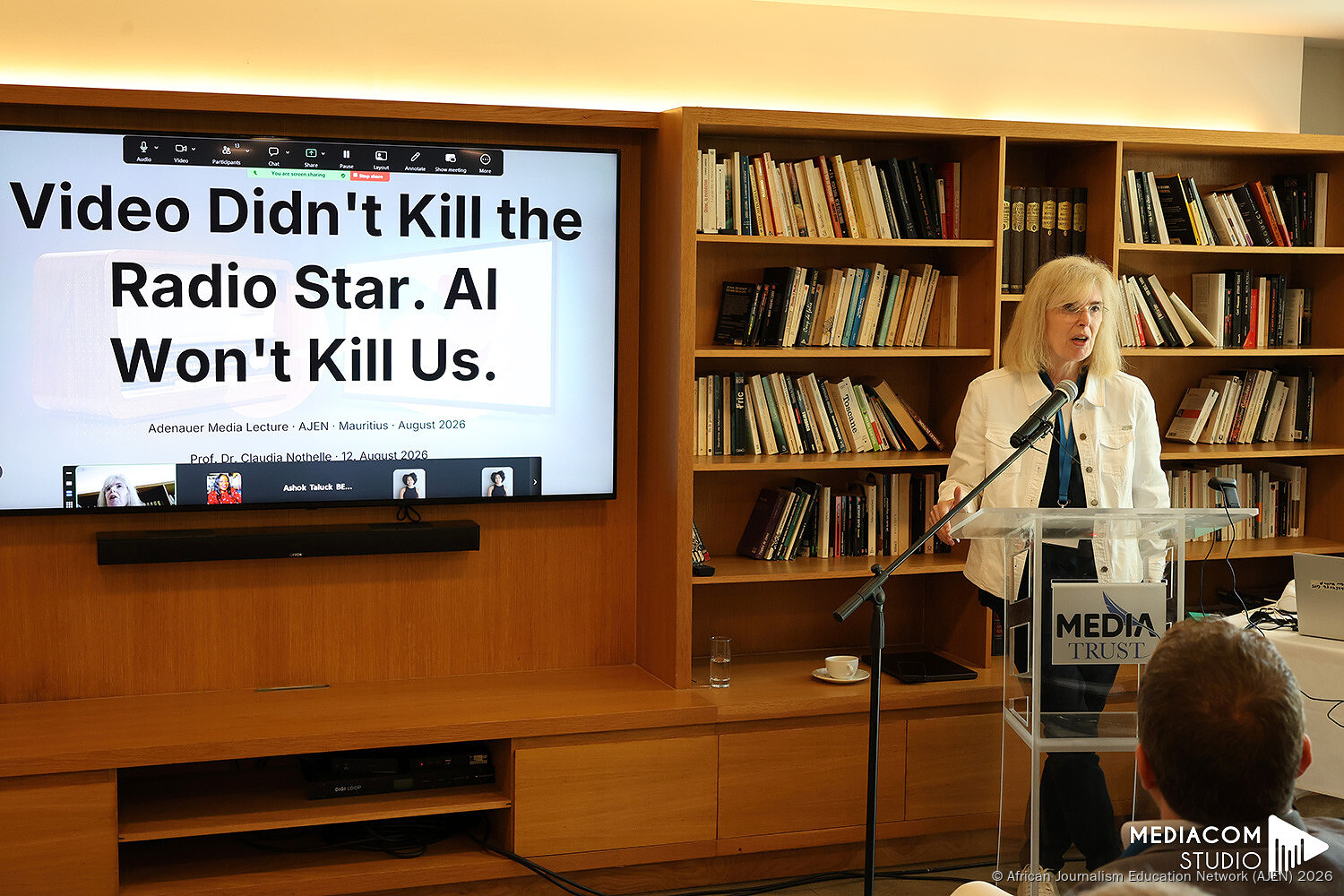
This difference is becoming more important for journalism students. Nothelle shared an exercise where she gives first-year students a press release to turn into a news story. She then has them use several AI language models on the same material and compare the results. The AI versions are often smoother and more polished, but they can include made-up information. In one case, a chatbot created quotes from an interior minister who never made those statements.
The point is not that students should avoid AI, but that they need to learn how to question it. Nothelle suggests including AI in journalism teaching instead of treating it as a separate topic. This way, students can try out the tools while building the skills to judge their results. This means learning how to prompt well, understanding the limits of generated images, and checking information with reliable sources.
Notelle’s comparison with radio reminded us that new technologies do not necessarily make existing forms of journalism obsolete; they challenge the industry to reconsider its purpose and adapt.
AI doesn’t just change how journalists work; it changes what it means to study, to write academically, to produce knowledge,” she emphasised. For African newsrooms, relying on cloud-based tools and services from other countries raises concerns about data protection, cost, and digital infrastructure. The fact that most AI training data is in a few global languages also asks which journalism gets more attention and which voices are left out.
“AI is not the end of that journalistic purpose. It is the latest test of whether we remember what it is,” she adds.
From Research to the Newsroom
In his workshop, ‘Tools and Applications in the Modern Newsroom,’ Harry Misiko, Managing Editor of Content Strategy at Kenya’s Nation Media Group, looked at the topic from a newsroom perspective. He showed how AI can help journalists at different steps of reporting, such as analysing documents, finding story angles, drafting, creating headlines, and producing multimedia.
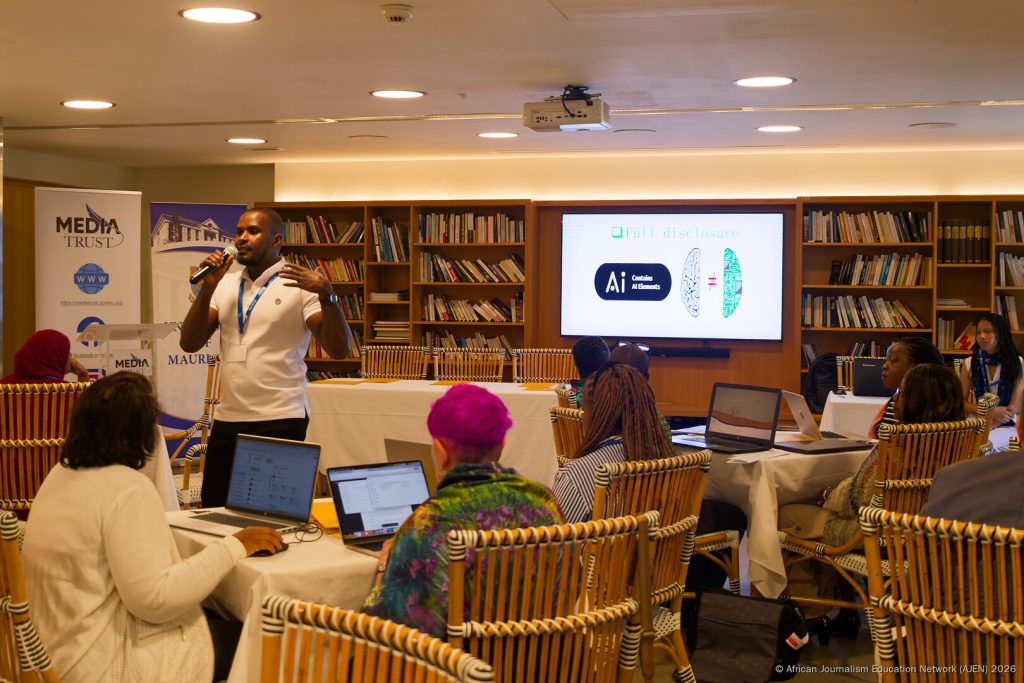
Misiko used an example about an Ebola outbreak in the Democratic Republic of Congo to show how generative AI can help review documents, spot possible story leads, and organise information. Still, he stressed that journalists need to take these conclusions into the field to check and confirm them.
“You realise that the learning in AI has expanded possibilities, but we still have to decide the priorities,” he told us. “It will go on and on and on, but the human has to define the boundaries and the priorities of what we can do and what we cannot do.”
The workshop also looked at how the same information can be changed for different audiences. Misiko also covered search engine optimisation, social media headlines, and newsletter subject lines, showing how AI can create several options for editors to review and improve.
Misiko sees the value of this technology in the time it saves and the new options it provides. For example, tools like NotebookLM can turn documents into summaries, reports, slide decks, quizzes, and audio overviews. AI can also help newsrooms turn one story into different formats, such as a short radio bulletin, a podcast discussion, a WhatsApp explainer or social media content.
But efficiency does not eliminate the need for editorial intervention. Misiko warned about the growth of “shadow AI,” where AI is used in universities or newsrooms without clearly defined policies or limits. He also pointed out that some newsrooms use AI to create first drafts, which journalists and editors then edit. The real question is not just what the technology can make, but who is responsible for the final work.
Keeping People in the Process
Together, the two sessions argued for an even-handed approach to AI in journalism education. Students should learn the tools they will use in newsrooms, but they also need strong reporting, writing, fact-checking, and editorial skills to use these tools responsibly.
As both speakers demonstrated, this technology can help journalists work faster and discover new narrative forms. It cannot replace the responsibility to establish what is true, understand who a story is meant to serve and decide what deserves to be published.