
By Enock Sithole
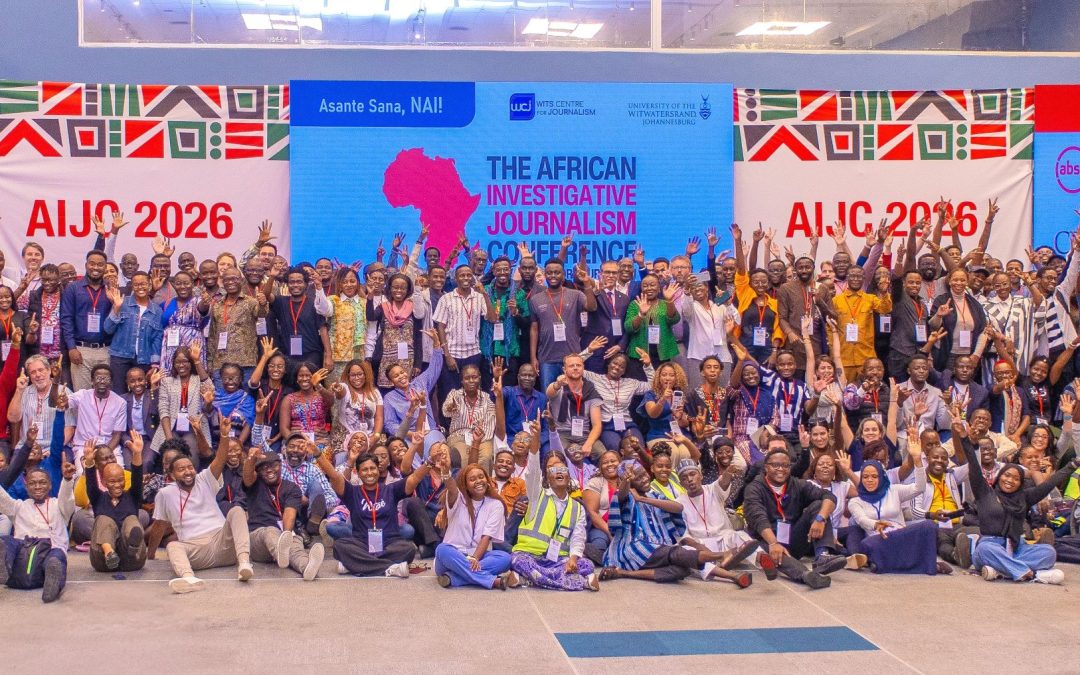
The African Investigative Journalism Conference (AIJC) has recorded its highest attendance in its 22-year history, attracting more than 500 delegates from 69 countries to its first gathering outside South Africa.
Held in Nairobi, Kenya, from 10 to 12 November 2026, the conference marked a significant milestone in its evolution into a truly continental event, bringing together investigative journalists, editors, academics and media professionals from Africa and around the world.
Organised by the Wits Centre for Journalism in partnership with Kenya’s Aga Khan University, the AIJC attracted 336 first-time attendees, demonstrating growing interest in the conference, particularly among media professionals in East Africa.
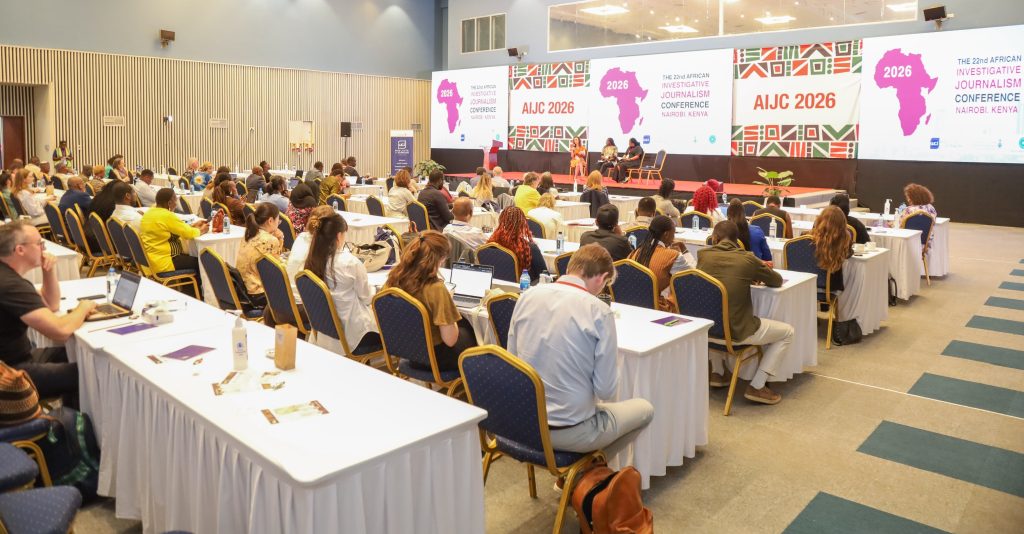
The three-day gathering, held at the Edge Convention Centre, featured approximately 70 sessions and more than 150 speakers, covering investigative journalism techniques, technological innovations and the growing threats facing journalists and independent media organisations.
Artificial intelligence dominated discussions, with 12 sessions devoted to its implications for investigative journalism, including its potential to improve investigations and the risks associated with misinformation, algorithmic bias and the growing influence of major technology companies.
Kenyan investigative journalist and Africa Uncensored co-founder John-Allan Namu delivered the opening keynote address, titled AI: Power, Promise and Peril, examining the implications of artificial intelligence for Africa.
Namu challenged journalists to question who controls the development of AI, whose interests it serves and how Africa’s resources contribute to the global technological revolution. He argued that AI should be assessed not simply by the jobs it could replace, but by its potential to empower people.
Other major topics included corruption, organised crime, environmental accountability, human rights, journalist safety, illicit financial flows and the financial sustainability of independent journalism, said AIJC organiser Beauregard Tromp.
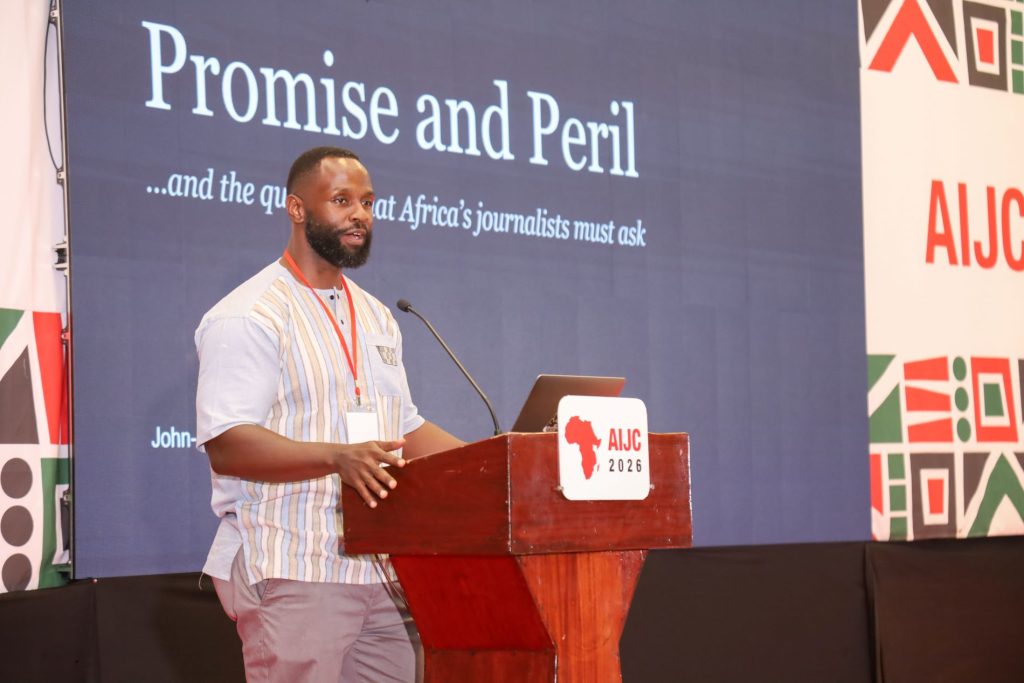
Pictured: John-Allan Namu
The conference also explored emerging investigative techniques, including satellite imagery, machine learning, open-source intelligence, data journalism and artificial intelligence-assisted reporting.
According to a review published by the Global Investigative Journalism Network (GIJN), the programme included 21 sessions on new investigative tools and techniques, 12 on human rights violations, 11 on environmental and climate issues, and 10 on collaborative journalism.
Among the highlights was a computer-assisted investigative journalism masterclass. Tromp said the training attracted more than 400 applications, although only 24 journalists could be accommodated, illustrating the growing demand for advanced investigative skills.
Climate change featured prominently in the discussions, including a keynote presentation by South African environmental and human rights activist Kumi Naidoo, president of the Fossil Fuel Treaty Initiative and former executive director of Greenpeace International.
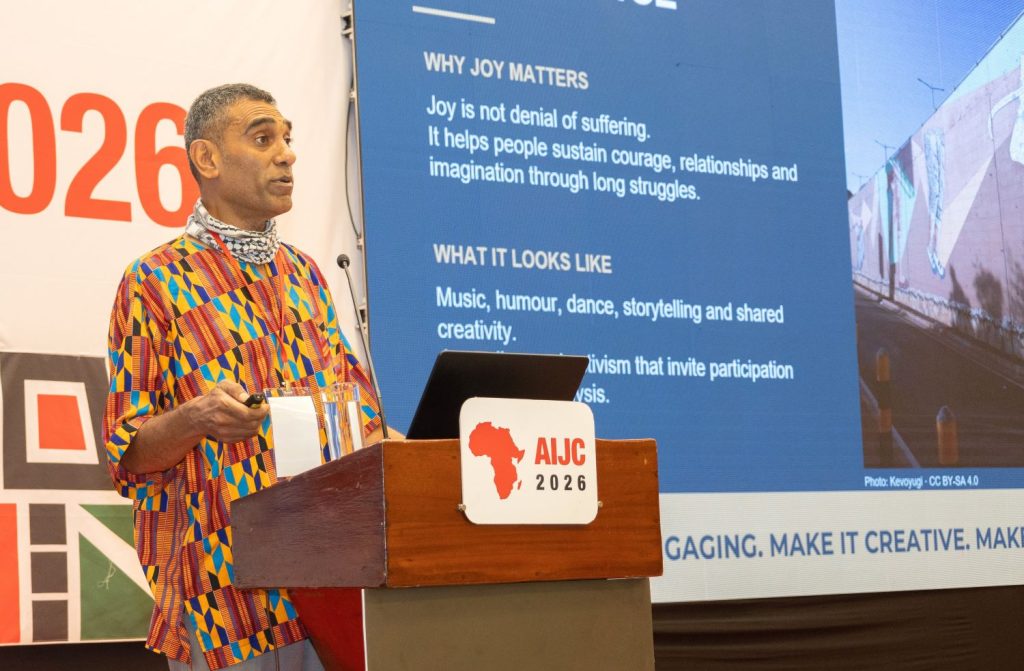
Pictured: Kumi Naidoo.
Naidoo’s address, titled The World Has Never Been in Greater Danger. This Is How We Save It, examined the interconnected nature of global crises and the responsibility of journalists to investigate the powerful interests contributing to environmental destruction and social injustice.
Other sessions demonstrated how satellite imagery, geographical information systems and machine learning could be used to investigate environmental damage, identify deforestation and track illicit agricultural activities.
An important development was the launch of the Africa Mining Watch platform by the Pulitzer Center, in collaboration with Earth Genome and Code for Africa. The initiative is intended to strengthen investigative reporting on mining and the environmental and social consequences of extractive industries.
The conference also highlighted the growing importance of cross-border collaboration in investigating corruption, organised crime, migration, critical minerals and illicit financial flows.
Journalists from Africa, Europe, the Americas and the Middle East discussed opportunities to develop international investigative partnerships and share technological expertise.
The safety of journalists was another major concern, particularly in countries where reporters face imprisonment, intimidation, surveillance and violence for exposing abuses of power.
The annual Carlos Cardoso Memorial Lecture, named after the Mozambican investigative journalist assassinated in 2000 while investigating corruption, focused on the plight of 16 Eritrean journalists detained without trial for approximately 25 years.
The lecture was delivered by Eritrean journalist and former political prisoner Yirgalem Fisseha. A symbolic presentation featuring empty chairs representing the detained journalists highlighted the continuing threats to press freedom in Africa.
Another highlight was the African Investigative Journalist of the Year Awards, which recognise outstanding investigative reporting across the continent.
South African investigative journalist, Jeff Wicks of News24, won the 2026 African Investigative Journalist of the Year Award for his investigations into alleged crime kingpin Vusimuzi “Cat” Matlala, including his controversial R360-million police contract and alleged links to senior police officials.
The first runners-up were Folashade Ogunrinde and Oladeinde Olawoyin of Nigeria’s Premium Times, working with The Examination.
Second runners-up were Kenya’s Naipanoi Lepapa, working with Julia Lindblom of Göteborgs-Posten and Ahmed Abdigadir of Svenska Dagbladet in Sweden, for their investigation Your Eyes, Their Data.
The record attendance and successful hosting in Kenya represent an important step towards establishing the AIJC as a truly continent-wide platform for investigative journalism, professional collaboration and the exchange of reporting skills.
However, given the costs of hosting the conference outside Wits University, the event will return to Johannesburg in 2027.
“It’s not sustainable to move it from country to country. At Wits, we have the advantage of using some resources without having to pay,” said Tromp.
Countries and regions have been given an opportunity to pitch to host future conferences, Tromp said, meaning the event could be held in another African country.
According to GIJN, the organisers are considering another conference outside South Africa in 2028, potentially in Kenya or another African country.
The Nairobi gathering has demonstrated that the AIJC can extend its geographical reach while maintaining its role as a leading platform for strengthening investigative journalism and holding powerful interests accountable across the continent.