
News
Ajen publishes a monthly newsletter, called AJENda, to keep colleagues aware of changes to the journalism landscape in Africa from an academic, research and professional point of view.
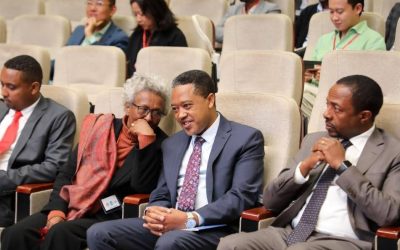
EACA Conference tackles challenges and Opportunities for media and communication in East Africa
The recently concluded East African Communication Association (EACA) conference in Addis Ababa, Ethiopia, brought together over 300 delegates from across East Africa and beyond to deliberate on the role of media in African integration, the future of journalism education and the growing impact of digital technologies on the continent.
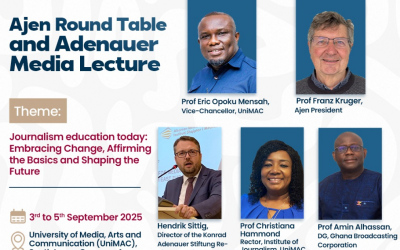
AJEN 2025 Roundtable
Preparations are well underway for the fourth Roundtable meeting of the African Journalism Education Network (AJEN) to take place at the University of Media, Arts and Communication, Institute of Journalism (UniMAC, IJ), Accra, Ghana, on 3-5 September 2025. Various speakers have been lined up to discuss various issues affecting journalism education on the continent.
Words that Wound: How African media reports on sexual violence – and why it should change
Contemporary media plays a crucial societal role in educating, informing, and entertaining, but coverage of sexual violence carries added responsibility. Media framing shapes public understanding, influencing beliefs, attitudes, and victim-blaming. Activists like Mbali Shongwe emphasise centering survivors’ voices to humanise statistics, while guidelines urge journalists to report ethically, sensitively, and responsibly. Insensitive coverage risks retraumatising survivors, perpetuating myths, and normalising sexual violence, highlighting the need for media accountability and survivor-centered reporting.

Professor Agyemang Calls for Balanced Integration of Non-Journalism Experts in Journalism Faculties
Professor Joseph Kwasi Agyemang, Professor of Accounting Sciences at the University of South Africa (UNISA) and the University of Eswatini, has stated that the inclusion of non-journalism professionals in journalism faculties can have both positive and negative implications on the quality of journalism training, depending on how these individuals are integrated into the curriculum.
Wave of coups in Africa: How are German media reporting on the coups in Niger and Gabon?
In 2023, a coup overthrew the government in Niger, followed shortly thereafter by a coup in Gabon: an indication of the fragile security situation in many African countries, which is also being discussed in Western media. Reports from Africa correspondents of selected German-language media outlets and news magazines provide insight into the international community’s reactions to both coups.

Bogus journalism schools threaten democratic development
Across Africa, the demand for quality journalism education is rising rapidly, yet journalism schools are unable to keep pace. In several African countries, public universities offering journalism programmes are often overcrowded, underfunded and constrained by outdated curricula.
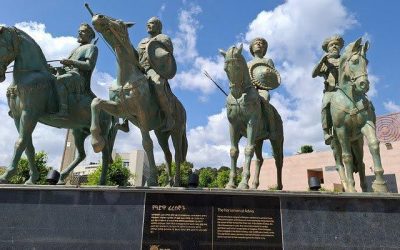
Historic Adwa Museum to host EACA 2025
The Adwa Victory Memorial Museum in Addis Ababa is preparing to welcome African media and communication scholars to the 15th edition of the East African Communication Association (EACA) conference, scheduled for 27-29 August 2025.

Bridging the AI Gap in African Journalism Education
In the global rush to harness the transformative power of Artificial Intelligence (AI), Africa’s journalism schools are perilously trailing. While AI rapidly redefines how news is gathered, verified and delivered, from algorithmic news writing to AI-assisted investigative reporting, many African journalism programmes remain frozen in time, still prioritizing analog newswriting techniques over digital fluency. In an era where misinformation spreads at the speed of light and audiences demand data-backed, real-time reporting, the absence of AI integration in African journalism education is not just a curriculum shortfall; it is a crisis of relevance.
New Publications in July 2025
Explore our latest list of new publications and articles that explore key themes shaping media and communication today. From rethinking propaganda in an age of disinformation to unpacking trust in science communication, these works challenge dominant narratives and offer fresh, critical perspectives. Also featured is African-centred research that examines how news media across the continent shape public discourse around AI.

Rethinking Practical Training in African Journalism
Journalism education in Africa is facing a critical reckoning. Despite a steady stream of graduates, many enter newsrooms ill-equipped for the realities of modern journalism, lacking practical skills, digital fluency, and newsroom readiness. In this in-depth analysis, Dr Richmond Acheampong explores the disconnect between outdated, theory-heavy curricula and the fast-paced demands of contemporary media. Drawing from voices across academia and industry, the article highlights urgent reforms, including integrated newsroom labs, mentorship models, and campus media incubators as key to reshaping journalism training for a digital, truth-seeking future.

Climate change misinformation exacerbates the impacts of global warming
Rampant climate misinformation is accelerating the global climate crisis, warns a major new report by the International Panel on the Information Environment (IPIE). The global study, based on 300 academic sources, finds that fossil fuel companies, political actors, and digital disinformation campaigns are obstructing climate action through denialism, greenwashing, and misleading narratives. The IPIE calls for urgent countermeasures, including criminalising climate disinformation, and urges media platforms to uphold integrity. With global events like COP30 on the horizon, the fight against climate lies is more critical than ever for achieving emissions goals and environmental justice.
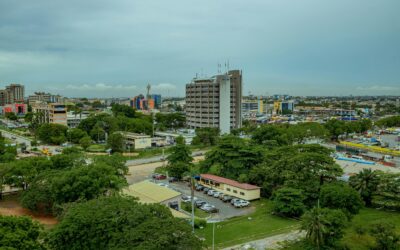
Ajen roundtable meeting 2025 to be held in Accra
The African Journalism Education Network (AJEN) will host its fourth Roundtable from 3–5 September 2025 in Accra, Ghana, at UniMAC’s Institute of Journalism. Under the theme Journalism Education Today: Embracing Change, Affirming the Basics and Shaping the Future, the event will bring together journalism educators from across the continent for high-level discussions, networking, and collaboration. Highlights include the Adenauer Annual Lecture by Prof Claudia Nothelle (Germany) and a UNESCO-led workshop on media and information literacy. The roundtable aims to advance journalism education in Africa amidst rapid media shifts, with support from partners like Fojo Media Institute and the Wits Centre for Journalism.

Ghana’s UniMAC is pioneering a rigorous PhD programme
The University of Media, Arts and Communication (UniMac) in Ghana has launched a pioneering PhD programme in communication and media studies — one of the few of its kind in the country. Developed across six specialist strands, the four-year programme combines rigorous coursework with advanced research training.
Pushed to the margins: The marginalization of Africa in the media
The marginalization of Africa in the mainstream media is overwhelming and consistent. Only a minimal proportion of available airtime or print space is devoted to African issues. Even fundamental events in Africa, such as “the deadliest war of the 21st century” (Tigray) and what is currently “the world’s largest and most devastating humanitarian crisis” (in Sudan), are largely marginalized or even completely ignored. Reporting on Africa is not only marginal, but still appears to be dominated by so-called K-issues (wars, crises, catastrophes). When Africa is reported on, which is rare, the coverage is usually negative.
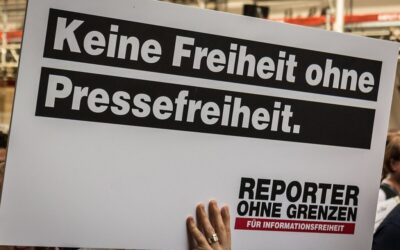
Press freedom: Economy and authoritarian tendencies cause problems for the media
War, authoritarianism, and economic crisis: Various organizations used this year’s World Press Freedom Day to draw attention to the alarming state of press freedom around the world. Reporters Without Borders classifies the situation for journalism in its Press Freedom Index and accompanying report as “difficult”: in half of all countries worldwide, conditions for journalists are considered poor, and the average score of the countries surveyed has reached a new low. A look at the developments and background.