
News
Ajen publishes a monthly newsletter, called AJENda, to keep colleagues aware of changes to the journalism landscape in Africa from an academic, research and professional point of view.
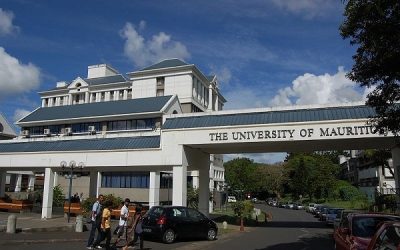
Paradise meets progress: Beautiful Mauritius hosts Africa’s journalism education roundtable
Journalism and communication academics from the continent are packing their bags for the 2026 edition of the annual roundtable of the African Journalism Education Network to be held in Mauritius under the theme Reimagining African journalism education in a time of Technological Disruptions and Possibilities.
East Africa’s landmark media research initiative delivers publications and new knowledge
Two years after the launch of an ambitious initiative to strengthen journalism, media and communication research in East Africa, the project is beginning to produce tangible results, including scholarly publications, innovative research and strengthened regional collaboration among universities.

First PhD graduates at UCU signal a new era in Media and Communication Studies scholarship in East Africa
When Uganda Christian University (UCU) celebrates the graduation of the first doctoral candidate from its pioneering PhD in Communication Studies programme later this year, the occasion will mark more than an academic milestone.
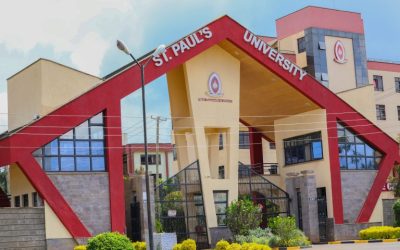
AI, mental health and journalism to dominate EACA conference
Artificial intelligence, mental health, environmental communication and journalism’s struggle to adapt to a rapidly changing digital landscape will dominate discussions when journalism and communication scholars from across the globe gather in Kenya in August 2026 for the annual conference of the East African Communication Association.

For three journalism students from South Africa and Zimbabwe, a journalism degree is an emphatic ‘yes’
Rather than making journalism education obsolete, WCJ students Keletso Zwane and Jamie Ho, as well as Rejoice Kambarami, who recently finished her journalism degree at Midlands State University, argue that technological disruption has made professional training more valuable than ever.
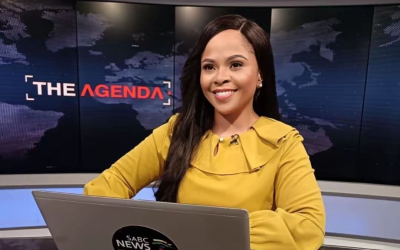
From child TV presenter to the national broadcaster: Why Criselda Lewis went back to journalism school after two decades in the newsroom
By Enock Sithole When Criselda Lewis was just 12 years old, a chance visit by television talent scouts to her school changed the course of her life....
Why journalism degrees still matter in the citizen journalism, AI and social media age
As artificial intelligence transforms news production, social media turns ordinary citizens into instant publishers, and misinformation spreads faster than ever before, a fundamental question confronts journalism schools across Africa and beyond: Does studying journalism at university still matter? AJEnda sought the views of three journalism students and one who has recently graduated to know more.

New Publications in June 2026
This latest list of new publications includes discussions on decolonisation of media and communication scholarship, the relationship between connectivity, media and women’s empowerment in Nigerian households, and how alternative media manifest and exist across the Global South. Added to this, a new book on communication as an agent for change in Sub-Saharan Africa.
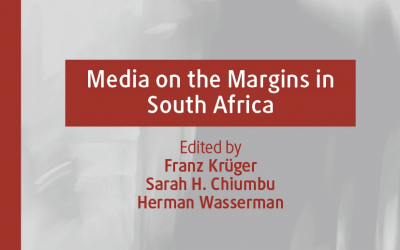
Media on the Margins in South Africa – new book examines local and community media workings in post-apartheid
The Media on the Margins in South Africa book arrives at a critical moment for journalism and democratic communication in South Africa and across the African continent. Edited by Professors Franz Krüger, Sarah H. Chiumbu and Herman Wasserman, the volume offers one of the most comprehensive contemporary examinations of community and local media in post-apartheid South Africa.

What the History of Argentine Television Teaches Us About the State, Market Power, and the Media
At a time when the foundations of democracy are being tested worldwide, it is important to understand the role media systems have played in recent authoritarian pasts. The history of television in Argentina reveals an unusual alliance between market logic and state control. It also illustrates how the government used entertainment as a means to create a sense of social normality.
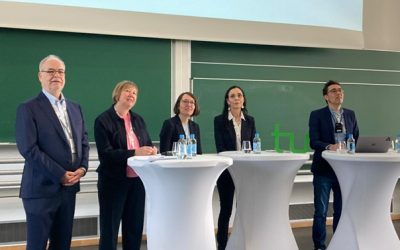
Rethinking Communication in the Crisis of Democratic Institutions
Democratic institutions are faltering—and with them, journalism and the public sphere. Otfried Jarren argues that communication studies should not merely observe, but actively participate in reshaping the landscape.
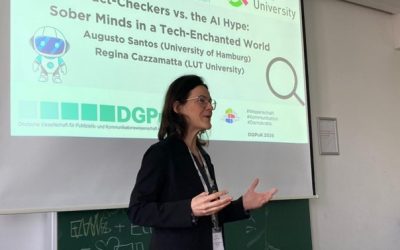
Fact-Checking: Between Efficiency and Control
Can a machine verify the truth? As generative AI becomes increasingly powerful, fact-checkers face a fundamental question: How much responsibility can be delegated to algorithms—and where must clear boundaries be drawn?
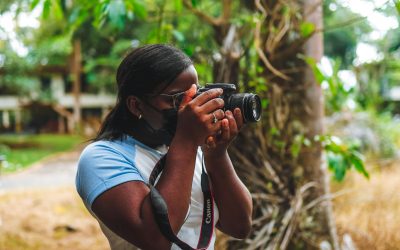
African women journalists battle harassment, digital abuse and leadership barriers as new initiative seeks change
Women entering Africa’s newsrooms continue to confront a difficult paradox: they are graduating from journalism schools in large numbers, yet relatively few remain long enough to rise into editorial leadership or media ownership. Across the continent, concerns over sexual harassment, low pay, hostile digital environments and unequal career advancement are increasingly shaping discussions about the future of journalism — and prompting new efforts to support the next generation of women media leaders.
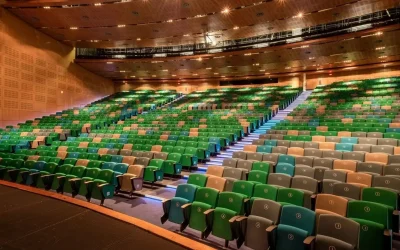
First ICA conference in Africa to tackle ‘communication and inequalities in context’
As global debates over inequality, artificial intelligence and information disorder intensify, the International Communication Association (ICA) will also hold its 76th flagship annual conference in Africa for the first time, a milestone organisers say signals a shift toward greater global inclusion in communication scholarship.
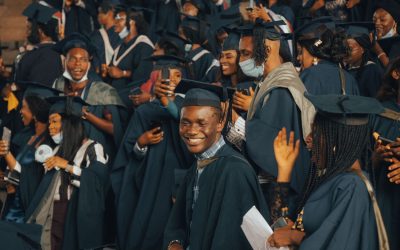
Global university boom leaves millions behind as inequality shadows higher education expansion
The world has witnessed an unprecedented expansion in higher education over the past two decades, with university enrolment more than doubling globally from around 100 million students in 2000 to 269 million in 2024. Yet, behind the celebration of mass access to universities lies a stubborn and widening reality that higher education remains deeply unequal depending on where students live, how much they earn, their gender, or whether they have been displaced by conflict, according to a UNESCO study released earlier this month.