
By Enock Sithole
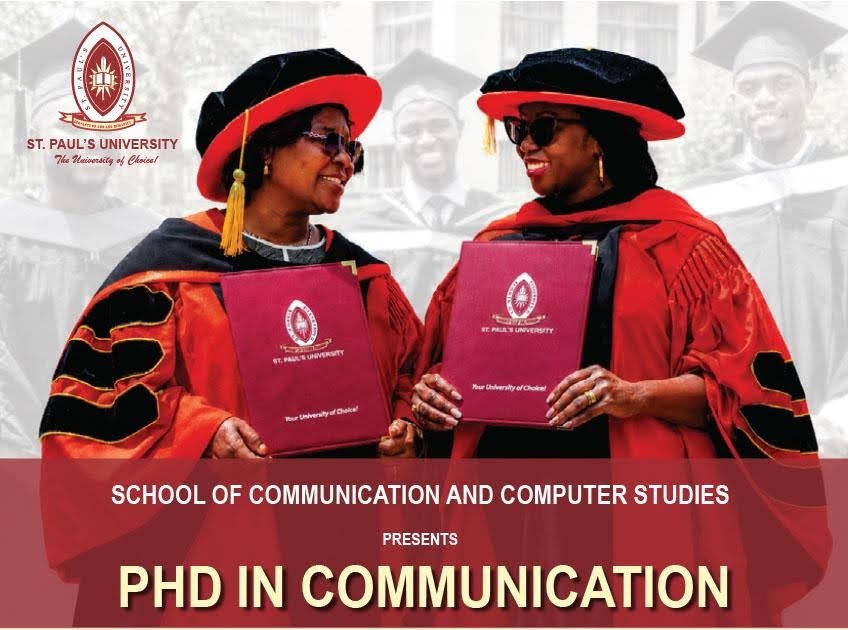
St Paul University, in Kenya, has formally launched its PhD in Communication, positioning the institution to respond to growing demand for advanced communication research and expertise across Kenya and the wider East African sub-continent.
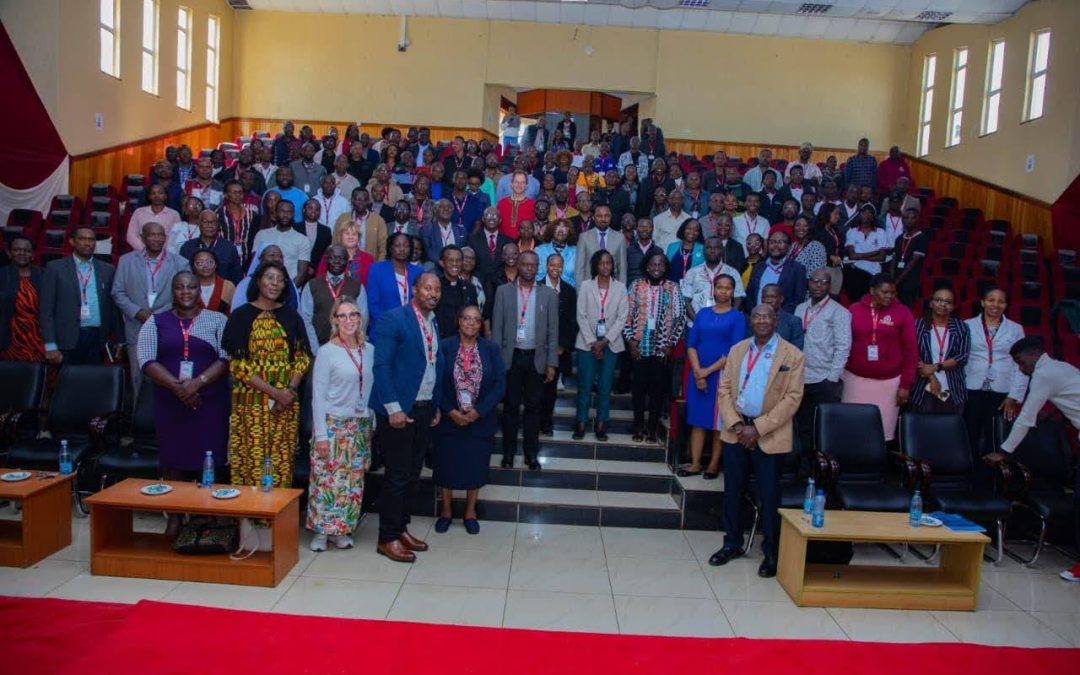
The doctoral programme was officially launched during the recently held annual conference of the East African Communication Association (EACA), which brought together communication scholars, educators and practitioners from across Africa and beyond.
Dr Gladys Muasya of St Paul University, who organised the conference, said the university had deliberately used the gathering as an opportunity to give the new doctoral programme greater visibility.
The programme has been running with for a year with two students, said Muasya, it has now attracted more candidates bring the total to seven.
The three-year course work and research dissertation programme offers three areas of specialisation: development communication, corporate communication/public relations and media studies.
Students undertake 10 compulsory coursework units before progressing to their doctoral research.
The curriculum includes communication theory, research methods, teaching and ethics, communication consultancy, legal frameworks, emerging and contemporary issues in communication, media studies, corporate communication strategies and techniques, development communication and project management.
Muasya said the programme was designed to cater for students from both academia and industry. Some of the students are university staff members seeking doctoral qualifications, while others come from the corporate sector.
A significant feature of the programme is its online delivery model, allowing students who are geographically dispersed to participate in weekly classes.
Responding to demand for communication PhDs
Muasya said there was a clear demand for doctoral-level training in communication and media studies in Kenya.
One of the issues, she argued, was the length of time students sometimes take to complete doctoral programmes at public universities.
“In the private sector, we are so much concerned about having a short turnaround,” she said, arguing that focused students could complete the St Paul University programme within the minimum three years, although students who experience difficulties or delays could take longer.
The university’s decision to launch the programme at an international communication conference served both an academic and strategic purpose: connecting the new programme to a regional community of communication scholars while highlighting the need for more advanced research capacity in the field.
The EACA conference itself attracted participants from a broad range of countries, including Kenya, Uganda, Tanzania, Rwanda, Burundi, Nigeria, South Africa, the United Kingdom and the United States.
AI emerges as a defining challenge for universities
But if the launch of the PhD programme was one of the institutional highlights of the conference, artificial intelligence emerged as one of its most important intellectual debates.
Muasya said AI featured prominently in discussions about the future of communication, including its implications for the communication profession, research, teaching and learning.
One of the strongest messages was that African countries should not remain merely consumers of technologies developed elsewhere.
African scholars and institutions, she said, need to become contributors to the development of AI, including contributing African knowledge, perspectives and content to the systems that increasingly influence how information is produced and consumed.
Generative AI can produce essays, summaries, presentations and other forms of academic work within seconds. This has created both opportunities and significant challenges for universities.
The classroom is already changing
The conference discussion highlighted a problem increasingly confronting higher education: students can use AI to complete assignments without necessarily understanding or critically evaluating the material it produces.
Muasya described a situation in which a student can simply feed an assignment into an AI system, receive an answer and submit it to a lecturer.
The problem becomes even more serious when students subsequently sit examinations without access to AI and discover that they have not acquired the knowledge or analytical skills that the assignment was supposed to develop.
At the same time, lecturers themselves can use AI to generate teaching materials and other academic content.
This creates a fundamental question for universities: what should be the role of the lecturer and what should be the role of the student in an educational environment where AI can generate much of the conventional academic output?
The conference discussion rejected a simple prohibition of AI. Instead, the emphasis was on finding ways of using the technology responsibly to strengthen learning.
“We cannot tell students not to use AI, and we cannot tell teachers not to use AI,” Muasya said. The challenge is to ensure that it is used “in a way that it enhances learning”.
This represents a significant shift in the debate. Rather than treating AI simply as a threat to academic integrity, universities are being challenged to redesign teaching and assessment so that AI becomes a tool for learning rather than a substitute for learning.
For communication and journalism education, this distinction is particularly important.
Africa must become a producer, not just a consumer
Muasya said the conference heard a strong call for Africa to move beyond simply consuming AI products developed elsewhere.
The continent needs to contribute to the technology and, importantly, to the information and knowledge embedded within it.
This is an increasingly important issue for communication because AI systems learn from vast quantities of existing information. If African perspectives, scholarship, languages, histories and experiences are poorly represented in those information ecosystems, AI-generated outputs may reproduce existing imbalances.
For African communication scholars, this creates an emerging research agenda: how can African universities help shape the knowledge environments that underpin AI?
The new PhD in Communication at St Paul University could provide one platform for such research, particularly through its specialisations in development communication, media studies and corporate communication.
Beyond AI: media freedom and the future of EACA
The conference also considered media freedom, with participants comparing experiences in Kenya, Uganda and Tanzania.
Muasya said one of the observations emerging from the discussions was that Kenya has considerable freedom of expression, but questions remain about how that freedom is exercised. “We have too much freedom of expression we don’t know what to do with it,” she said in jest.
Participants from Uganda and Tanzania highlighted a different challenge: the distinction between being able to express oneself and the consequences that may follow after expression. In those countries “you can express yourself freely, but you can’t be free after expressing yourself,” add Dr Muasya.
The conference also discussed the future sustainability of EACA.
According to Muasya, the association faces financial challenges because conference costs are largely borne by the host university, supplemented by registration fees. The latest conference cost approximately 1.5 million Kenyan shillings to organise.
The association, therefore, needs to explore additional income-generating activities and stronger sponsorship arrangements to support its work beyond its journal and annual conference.
Newly elected treasurer, Dr Anne Anjao Eboi, who is the head of Department of Media and Film Studies at Daystar University in Kenya, is expected to play a role in developing new approaches to fundraising.
The next EACA conference is expected to be hosted by Uganda, although this still has to be formally confirmed.