
By Dr Enock Sithole
When Uganda Christian University (UCU) celebrates the graduation of the first doctoral candidate from its pioneering PhD in Communication Studies programme later this year, the occasion will mark more than an academic milestone.
It will represent an important step in addressing one of Africa’s longstanding challenges, the shortage of highly qualified journalism and communication scholars capable of training the next generation of media professionals and producing research that responds to the continent’s unique communication needs.
The programme, developed through international collaboration but firmly embedded within the university’s long-term academic strategy, is already beginning to deliver on that promise.
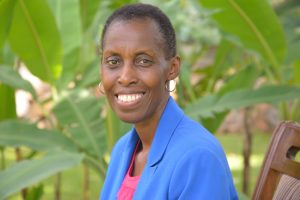
According to Professor Monica Chibita (pictured), Dean of the Faculty of Communication Studies at UCU, the doctoral programme has maintained steady progress since its launch last year.
 “The programme is on course. We have not missed an admission,” Chibita said.
UCU has so far admitted two cohorts of approximately eight doctoral candidates each and will welcome a third cohort in September. The first group has now reached the final stages of the demanding doctoral journey.
One candidate has submitted a dissertation for examination and is expected to graduate in October, while at least five others are preparing to submit their dissertations before the end of the year, positioning them to graduate in March 2027. The remaining candidates are awaiting ethical clearance before embarking on field research.
The doctoral programme is one of several initiatives designed to strengthen journalism and communication education in East Africa through advanced research, academic leadership and curriculum development.
The PhD programme is structured to accommodate experienced professionals who continue working while pursuing doctoral studies.
The courses are partly delivered online to enable students from outside Kampala, other parts of Uganda and even abroad to participate without leaving their jobs. Students and lecturers meet physically only once a year during intensive week-long seminars, while most teaching takes place virtually.
The flexibility reflects the realities of doctoral education in Africa, where many candidates are academics, journalists or communication practitioners with demanding professional responsibilities.
Candidates are given between two and four years to complete their doctoral research. Eight students receive financial support through the programme, while the remaining candidates fund their own studies.
Research undertaken within the programme spans four broad thematic areas: Media, Democracy and Development; Media, Gender and Representation; Media, Risk and Crisis Communication; and Media, Science and Health Communication.
Prof Chibita said the strongest interest has emerged in Media, Democracy and Development and Media, Science and Health Communication, reflecting growing regional demand for research that addresses governance, public health and science communication.
Approximately half of the doctoral candidates pursue journalism-focused research, while the remainder investigate broader communication issues, including rapidly expanding fields such as health communication.
The emphasis on contemporary communication challenges mirrors developments across neighbouring Rwanda, where a parallel master’s programme in journalism and communication is also expanding.
The University of Rwanda’s 2024 master’s cohort is now in its second and final year, with students developing research proposals after completing an intensive curriculum combining theoretical scholarship with practical media training.
While international scholars contribute specialist expertise, most teaching is delivered by University of Rwanda lecturers, reinforcing the programme’s objective of building sustainable local academic capacity.
The curriculum combines communication theory, journalism theory, media governance, gender, culture and communication with practical modules in audio-visual production and advanced multimedia production. The programme has also recently acquired new television studio equipment to strengthen practical training.
For both institutions, however, producing graduates is only part of the objective. A central goal is developing academic leadership capable of transforming journalism education across the region.
Many doctoral candidates are already lecturers at universities, meaning their new qualifications will directly influence future generations of journalism students.
“In both programmes, many of the students are lecturers at different local universities,” said Prof Terje Skjerdal of Norway’s NLA University College when the two programmes were launched last year. “A big part of the competence is to learn teaching methods and content to be used for teaching at local universities.”
Beyond academia, the programmes also seek to strengthen professional leadership within news organisations, media companies and communication agencies.
“Those who are working in the media will typically be equipped with leadership competence in media studies,” he said. “These candidates will be leaders at different levels in the media business and communication agencies. These degrees are mainly about educating leaders in journalism and communication as well as teachers, lecturers and researchers.”
At UCU, that vision is already becoming reality. Prof Chibita revealed that eight doctoral candidates across the first two cohorts are expected to join the university’s academic staff after graduation, having received scholarships specifically intended to build institutional capacity.
She believes their contribution will extend well beyond filling vacant academic positions.
“During the stakeholder consultations before we launched the programme, we discussed the growing deficit of critical engagement in our field,” she said. “We expect that our graduates will help address this deficit.”
Central to the programme’s philosophy is encouraging candidates to question dominant communication theories and methodologies while producing scholarship rooted in African realities.
The university also seeks to integrate Christian values into teaching and research without compromising academic rigour.
“We are intentional about integrating faith into our teaching and learning while maintaining academic rigour,” Chibita said.
Although externally funded, the programme was designed with long-term sustainability in mind. Most lecturers are locally employed by the university, additional academic staff is being trained, and scholarships are directed towards strengthening institutional capacity rather than supporting temporary projects.
“This programme is not going anywhere,” Prof Chibita said. “Even if the funding should end one day, the programme is embedded within the structures of the university and will continue.”
Like many doctoral programmes worldwide, however, the initiative has also revealed important lessons.
The greatest challenge has been helping full-time professionals balance demanding careers with doctoral research.
“We underestimated how difficult it is for people working full time to complete a PhD,” Prof Chibita admitted.
Future improvements may include introducing weekend teaching to provide even greater flexibility. Another lesson has been the difficulty of fostering a strong academic community within a predominantly online programme.
While students remain connected through platforms such as WhatsApp and Zoom, the university is exploring additional ways of strengthening peer interaction and scholarly collaboration.
As East African universities increasingly invest in advanced journalism and communication education, programmes such as those at UCU and the University of Rwanda are laying the foundations for a new generation of researchers, educators and media leaders.
Their success will ultimately be measured not only by the number of doctoral degrees awarded but also by the quality of scholarship, teaching, and professional leadership their graduates bring to Africa’s rapidly evolving communication landscape.